

Estimated reading time: 7 minutes
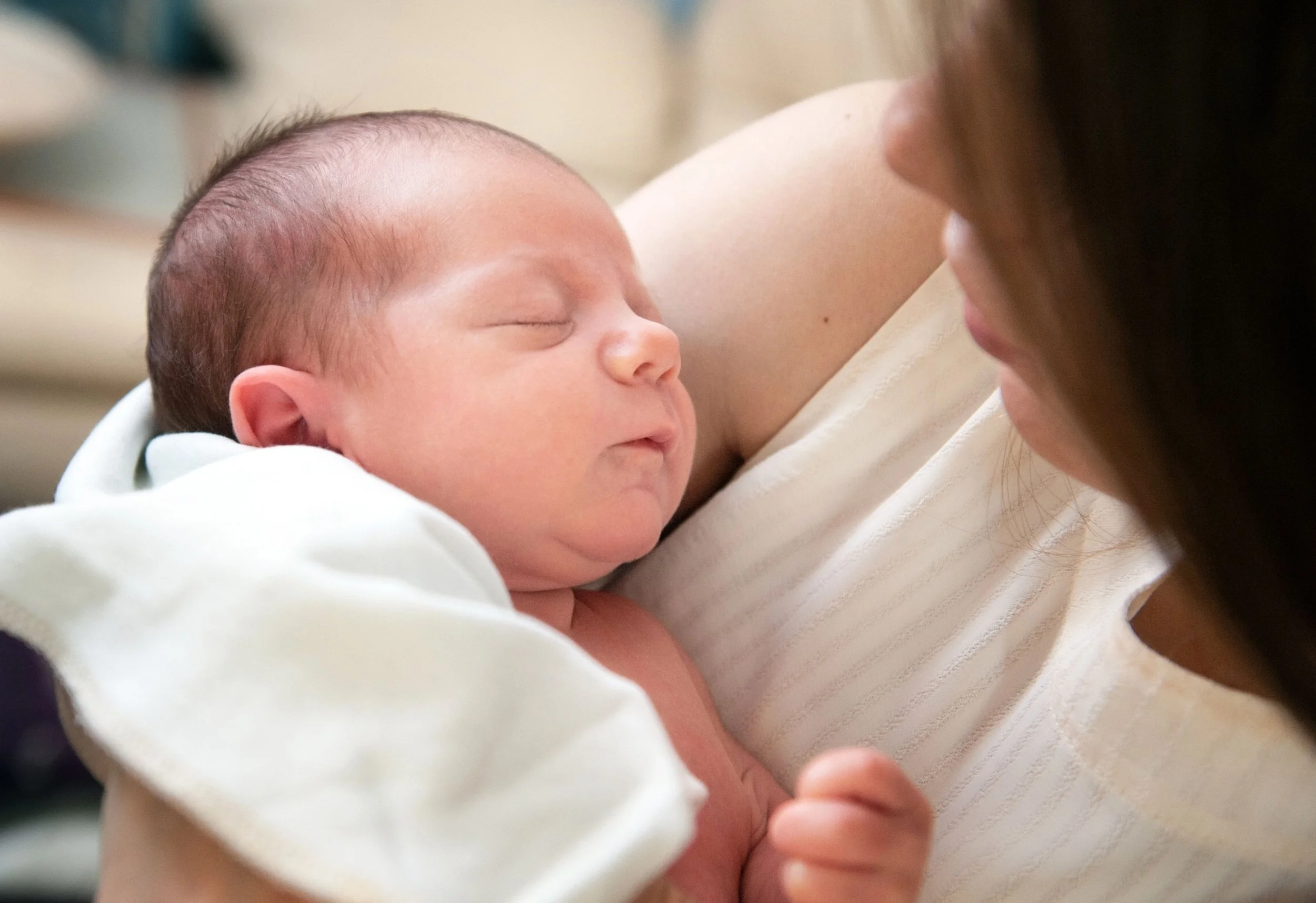
At 2:00 in the morning, the baby is finally asleep. The bottles are washed. Tomorrow’s work messages have been answered. Everyone who asks receives the same response:“We’re doing fine.”
But in the quiet, one parent lies awake with a racing mind. She is exhausted but cannot sleep. She loves her baby, yet she no longer feels like herself. She wonders why other people seem able to manage this—and why she cannot.
By morning, she will be functioning again.
That is one reason postpartum depression can be difficult to recognize. It does not always look like someone who has stopped caring for herself or her child. Sometimes it looks like competence: returning emails, attending meetings, keeping appointments, and making sure everyone else is all right.
A person can be performing impressively and suffering deeply at the same time.
The question is not simply, “Is she still functioning?” A better question may be: “What is functioning costing her?”
When strength becomes a place to hide
Educated and professionally accomplished people often become skilled at compensating. They solve problems, care for others, and continue meeting expectations even when their internal resources are nearly gone.
After childbirth, those strengths can become a disguise.
Naomi Osaka’s experience illustrates this contradiction. One of the world’s most accomplished athletes, she returned to training and competition after giving birth. Yet she later described an extremely difficult postpartum period in which she felt like a shell of herself while the rest of the world seemed to be living in color.
Professional achievement did not protect her. Returning to work did not prove that she was emotionally well.
The same may be true of the physician seeing patients, the attorney meeting deadlines, the executive leading a team, or the mother keeping an entire household organized.
What hidden postpartum distress can look like
| What others see | What the parent may be experiencing |
|---|---|
| Returning to work | Fear, numbness, or overwhelming exhaustion |
| Keeping everything organized | Anxiety and a desperate need for control |
| Caring attentively for the baby | Constant worry about making a mistake |
| Saying, “I’m just tired” | Shame, sadness, or feeling unlike oneself |
| Refusing help | Fear of judgment or loss of autonomy |
Functioning tells us what someone is managing to do. It does not tell us what the effort is costing emotionally.
Postpartum depression does not have one face
Postpartum depression may involve persistent sadness, guilt, hopelessness, emotional numbness, loss of pleasure, appetite changes, difficulty concentrating, or a painful sense of inadequacy.
But not everyone looks visibly depressed.
Some people become irritable or unusually angry. Some withdraw. Others overfunction, become rigidly organized, or try to control every detail because control feels like their only defense against being overwhelmed.
Postpartum anxiety can bring relentless worry, racing thoughts, panic, physical tension, or a persistent feeling that danger is nearby. A parent may be unable to sleep even when the baby is sleeping.
Olivia Munn has described postpartum anxiety that included waking early with intense physical distress and difficulty breathing comfortably. Her experience reminds us that someone may truthfully say, “I’m not depressed—I’m just worried all the time,” while still needing meaningful support.
Some parents also experience unwanted, frightening thoughts about harm coming to the baby. These are called intrusive thoughts because they enter the mind without being wanted. They are not automatically evidence that someone intends to act on them. However, they deserve careful, nonjudgmental discussion with a qualified clinician.
Culture shapes whether suffering is recognized
Postpartum depression affects every racial and ethnic community. The pattern is not identical in every study: reported rates vary with the population studied, the period after childbirth, and whether researchers measure symptoms or documented diagnoses. A CDC report published in 2020, based on 2018 surveillance data, found elevated postpartum depressive symptoms among several racially minoritized groups. A 2024 study examining Southern California health records from 2010 through 2021 found that diagnoses increased across all racial and ethnic groups, with the steepest relative increase among Asian and Pacific Islander patients. (CDC; JAMA Network Open)
Documented prevalence still tells only part of the story. A lower recorded rate does not necessarily mean less suffering. It may reflect differences in screening, access to care, willingness to disclose symptoms, and whether clinicians recognize the distress.
For people of color, immigrants, first-generation professionals, and families outside the mainstream image of parenthood, seeking help may raise additional questions:
Will this clinician understand my family? Will I be judged as an inadequate parent? Will my symptoms be taken seriously—or used against me? Can I speak honestly without losing control over what happens next?
These concerns should not be dismissed as resistance. They may grow from personal experience, community history, or previous encounters with institutions that did not feel fair or safe.
Halle Bailey publicly described severe postpartum depression, difficulty being separated from her son, and the way social-media criticism intensified her distress. Her experience reflects a painful pressure many mothers recognize: parenthood can bring profound love while also making one’s body, choices, and family life feel open to other people’s judgment.
That burden may be especially heavy for women who already feel they must work harder to be viewed as competent, responsible, or deserving of respect.
Gratitude does not cancel emotional pain
Many parents struggle to reconcile two realities:
“I love my child.”
“I am not all right.”
Postpartum depression is not proof that someone does not want or love her baby. Nor does it mean she is ungrateful for becoming a parent.
Massy Arias, a Dominican-born fitness professional associated publicly with strength and discipline, described crying, losing her appetite, struggling with breastfeeding, and not immediately feeling connected to her daughter. Exercise became one way she coped with depression - not evidence that depression had never existed.
Her experience challenges a common assumption: that determination, physical strength, or professional success should make someone immune to postpartum depression.
They do not.
Teyana Taylor has similarly emphasized that women do not all experience postpartum depression in the same way. One mother may cry frequently. Another may become angry.
Another may feel emotionally absent. Still another may work harder, sleep less, and insist that nothing is wrong.
The goal is not to force people into a familiar story. It is to understand how distress is operating in this particular person’s life.
Good care should make room for culture
Getting help should not require someone to give up her privacy, faith, family identity, cultural values, or autonomy.
Good postpartum care makes room for the person’s actual life: multigenerational family relationships, spiritual beliefs, work obligations, financial pressures, language, gender identity, sexual orientation, fertility experiences, and previous encounters with racism or dismissal in health care.
A culturally responsive clinician does more than share a client’s racial or ethnic identity. The clinician listens without assuming, asks how the parent and family understand the problem, and works collaboratively to identify acceptable forms of support.
Family involvement may be comforting, stressful, or both. Faith may be a source of healing, while certain community expectations may make disclosure harder. Privacy may be essential.
Vietnamese American mother Thien Nguyen publicly described severe postpartum depression that affected her desire to live and her ability to care for her child. Her experience also illustrated the difficulty of finding care that felt culturally and linguistically appropriate.
Silence is not always caused by a lack of awareness. Sometimes people remain silent because they are uncertain whether the available help will understand them.

What partners and loved ones can do
A partner does not need to diagnose postpartum depression. The most important first step may be noticing a meaningful change and making it safer to talk about.
Instead of saying, “You seem fine,” try:
“I can see how hard you are working to keep everything going. I’m concerned because you don’t seem like yourself. What has this been like for you?”
Then listen without immediately trying to fix, debate, or minimize the experience.
Five practical ways to help
1. Protect sleep. Arrange a dependable period of uninterrupted rest whenever possible.
2. Take ownership of a task. Do not make the struggling parent manage or supervise the help.
3. Reduce isolation. Check in again after the first conversation.
4. Help locate care. Look for a therapist or medical professional experienced in postpartum mental health and culturally responsive care.
5. Attend an appointment if invited. Your observations and support may make it easier to describe what has changed.
Angelina Spicer, a Black comedian and maternal-mental-health advocate, received inpatient treatment during a severe episode of postpartum depression. She later became an advocate for improved maternal mental-health screening and support.
Her story matters because accepting substantial help did not erase her competence, identity, or future. It became a turning point.
Asking for help does not require someone to stop being strong. Sometimes it is how strength changes form.
When immediate help is needed
Postpartum psychosis is different from postpartum depression. It is uncommon, but it is a psychiatric emergency.
Seek immediate help if a postpartum parent is experiencing:
· Thoughts of suicide or harming another person
· Severe confusion or disorientation
· Paranoia or beliefs disconnected from reality
· Hearing or seeing things other people do not
· Extreme agitation or rapidly changing behavior
· Markedly unsafe or uncharacteristic actions
If it is safe to do so, stay with the person or arrange for another responsible adult to remain nearby while emergency assistance is being contacted. Do not place yourself or others in danger. Call 911 immediately when there is an imminent safety threat.
You do not have to fit the familiar picture
Someone can be intelligent, accomplished, culturally grounded, grateful for a child, and deeply devoted to family—and still need help.
Needing support after childbirth is not evidence of failure as a parent, partner, professional, or member of one’s community. It may be one of the most responsible things a person can do for herself and the people she loves.
If something has changed—if life feels emotionally colorless, anxiety never quiets, anger feels unfamiliar, or competence has become exhausting—you do not have to wait until everything falls apart.
You do not have to fit anyone else’s picture of postpartum depression to deserve care.
Information Board
Support Resources
Support and referral
Postpartum Support International HelpLine
Call
1-800-944-4773
or text HELP to
800-944-4773
.
The PSI HelpLine provides information, support, and referrals.
This is not an emergency service.
Urgent Help
Immediate or crisis assistance
988 Suicide & Crisis Lifeline
Call or text
988.
Immediate danger
Call
911
or go to the nearest emergency department.
Sources
References
- People. “Naomi Osaka Candidly Opens Up About ‘Extremely Bad’ Postpartum Depression Following the Birth of Her Daughter Shai.”
- People. “Olivia Munn Battled Postpartum Anxiety for Almost a Year After Son’s Birth: ‘Tunnel of Darkness.’”
- Marie Claire. “Halle Bailey Opens Up About Having ‘Severe’ Postpartum Depression.”
- Yahoo/People. “How Massy Arias Overcame Postpartum Depression and Difficulties Breastfeeding.”
- People. “Teyana Taylor on How Her Own Experience With Postpartum Depression Influenced Her ‘One Battle After Another’ Role.”
- USC Annenberg Center for Health Journalism. “Postpartum Depression Among Vietnamese American Mothers and the Cultural Barriers to Healing.”
- LAist. “It’s Part of Her Routine, but This Comedian Is Not Joking About Postpartum Depression and Anxiety.”
- National Institute of Mental Health. “Perinatal Depression.”
- Centers for Disease Control and Prevention. “Postpartum Depressive Symptoms and Provider Discussions About Perinatal Depression—United States, 2018.”
- JAMA Network Open. “Trends in Postpartum Depression by Race, Ethnicity, and Prepregnancy Body Mass Index.”
For general mental health education.